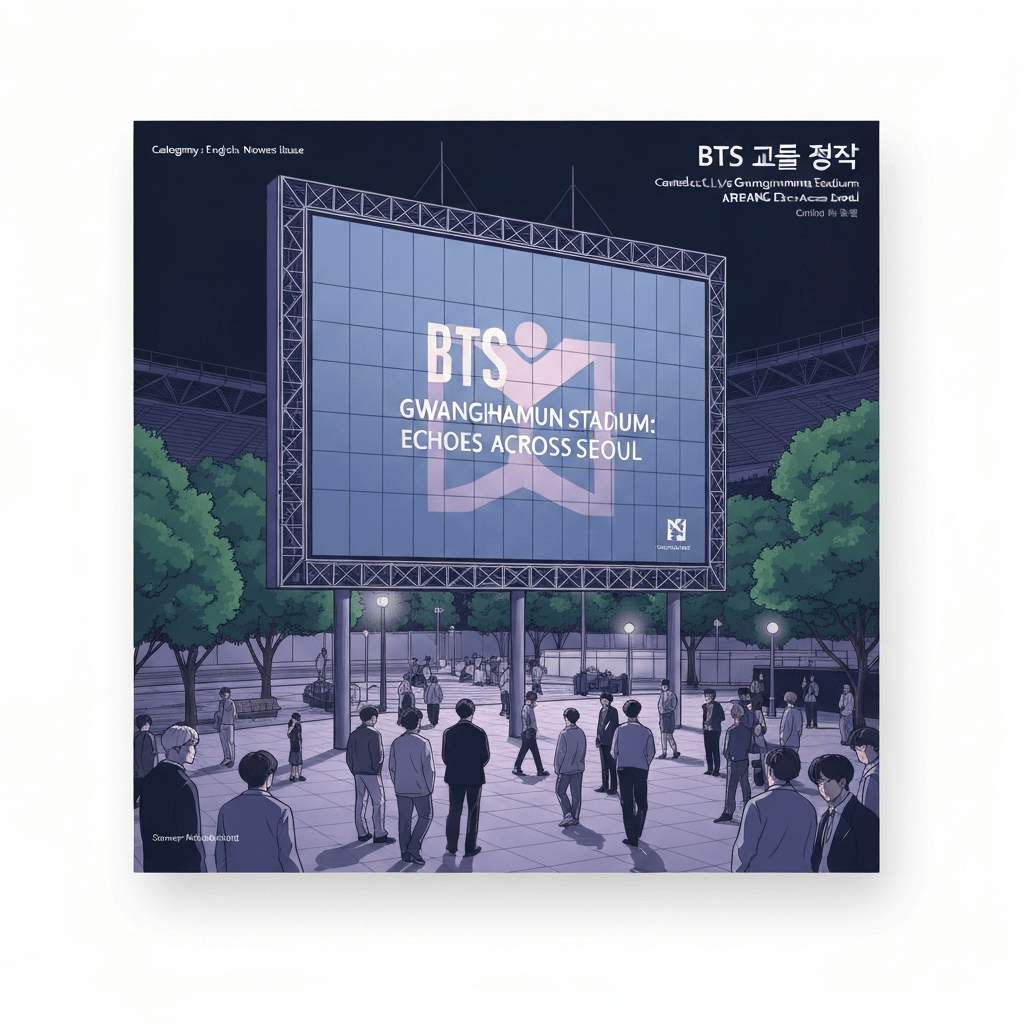
On 21 March 2026 at 20:00, BTS will hold their comeback live at 광화문 스타디움, an event now billed in headlines as the moment when “아리랑” will ring out across the plaza. The announcement has crystallized into a major citywide moment in Seoul, with widespread attention both online and in traditional media on the eve of the performance.
Organizers and local observers have noted that the event’s impact extends beyond ticketed spectators. Available reports indicate that roughly 260,000 members of the 아미 are expected to seek vantage points outside the stadium, turning streets, squares and nearby public spaces into informal gathering spots where fans plan to share the atmosphere even without seats. That sheer scale of public presence has made the comeback live a focal point for urban planning and crowd management discussions in central Seoul.
The choice to foreground “아리랑” in coverage—framed in many headlines as the song that will echo at the 스타디움—adds cultural resonance to the event, connecting a contemporary global pop moment with a traditional Korean tune. Media framing has emphasized both the symbolic and communal aspects of such a performance, suggesting that the live itself functions as a shared cultural experience for fans and passersby alike.
Safety has been a recurrent theme in reporting, with several outlets stressing the importance of framing the comeback live as a safe, global festival rather than merely a concert. The emphasis on safety and orderly celebration reflects awareness among authorities and stakeholders that this gathering, by scale and visibility, carries responsibilities for public order, transport, and health measures as it unfolds across a dense urban environment.
Coverage on portals and repeated reports in major media outlets have pushed the story to the top of news feeds, underscoring the event’s significance as more than a music release—it’s a cultural moment that has captured national attention. According to the source material provided by 머니투데이 (published 2026-03-20 06:00), the combination of a high-profile lineup, symbolic repertoire, and an estimated 260,000 fans converging outside formal seating frames the comeback live as an event with both local impact and broader cultural meaning.
답글 남기기