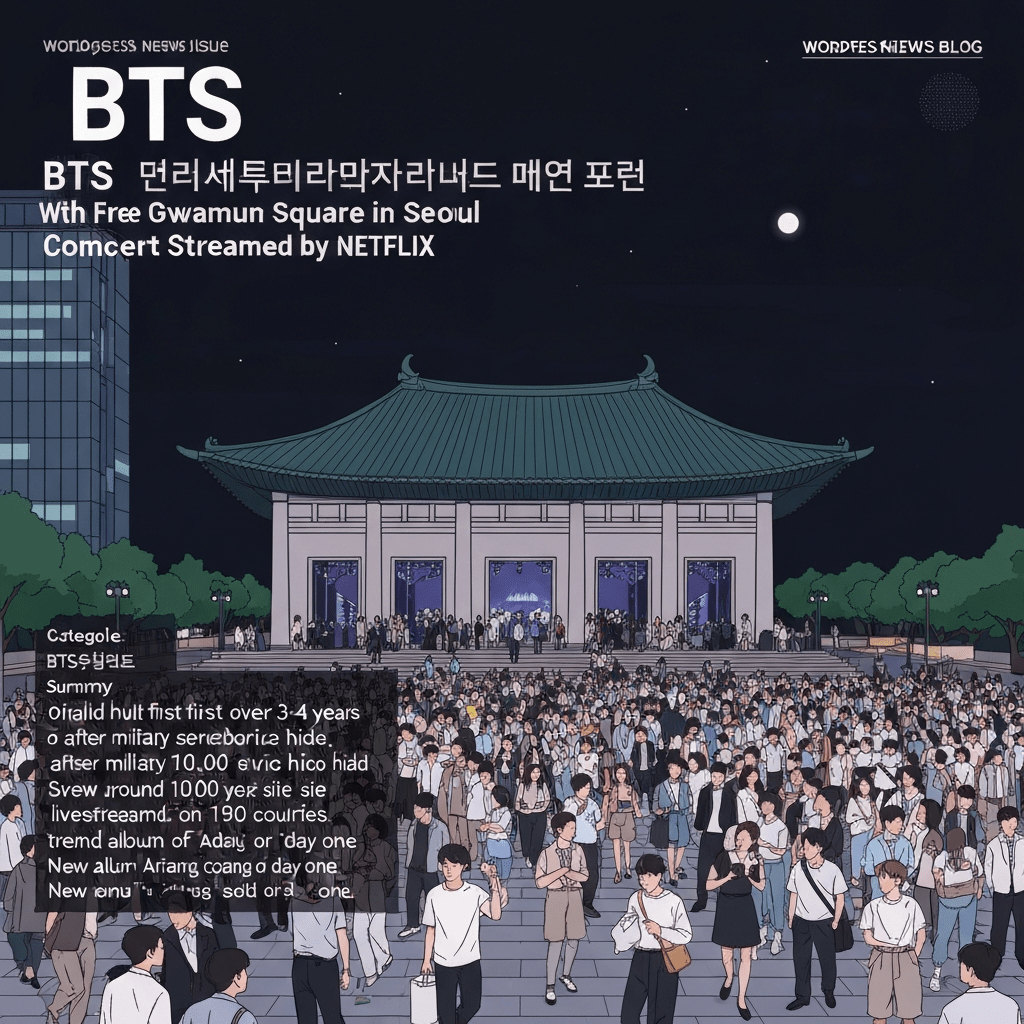
BTS returned to live performance at Seoul’s historic Gwanghwamun Square with a free comeback concert, marking their first group show in roughly three to four years since the military service hiatus and drawing a massive on-site and global audience. According to Arirang News (published 2026-03-23), the event blended Korean heritage with contemporary K-pop aesthetics and served as a high-profile reintroduction of the group to both domestic and international fans.
The concert and the crowd
The free concert at Gwanghwamun Square was framed as a celebration of BTS’s return after nearly four years of limited group activity due to mandatory military service. The performance reportedly drew around 100,000 fans in person, transforming the historic plaza into a dense, celebratory gathering that emphasized the group’s cultural ties to Seoul and to traditional Korean elements woven into their set. Arirang News provided repeated coverage of the event, underscoring its prominence in Korean media outlets.
How large was the audience and where did it reach?
In addition to the large on-site audience, the concert was livestreamed internationally via Netflix to viewers in 190 countries, and available reports indicate the livestream trended at number one in 77 countries. This simultaneous domestic turnout and expansive digital reach highlighted a dual success: a powerful local presence in a symbolic national space and immediate global resonance through streaming platforms.
Album performance and releases
The comeback coincided with the release of a new album referred to in provided notes as either ‘Arirang’ or ‘Adang’, with reports that the record sold 4 million copies on its first day. That single-day sales figure was presented in coverage as part of the larger rebound narrative for the group; the album’s title appears uncertain in the draft material, so both names have been noted as provided by the source.
Why the event matters
Beyond headline attendance and sales figures, the concert carried symbolic weight: it signaled a coordinated return to group activities while foregrounding Korean cultural motifs at a landmark Seoul venue. The layered coverage across multiple Arirang News segments emphasized the event’s significance for both national cultural expression and the global K-pop industry, demonstrating how a live event can function as a cultural touchstone for domestic audiences and a major streaming moment internationally.
답글 남기기