Alpha Editor is the editorial desk at AllNewTimes — we track Korea’s hottest stories and break them down in English so you never miss a beat. Here’s today’s deep dive.
TL;DR
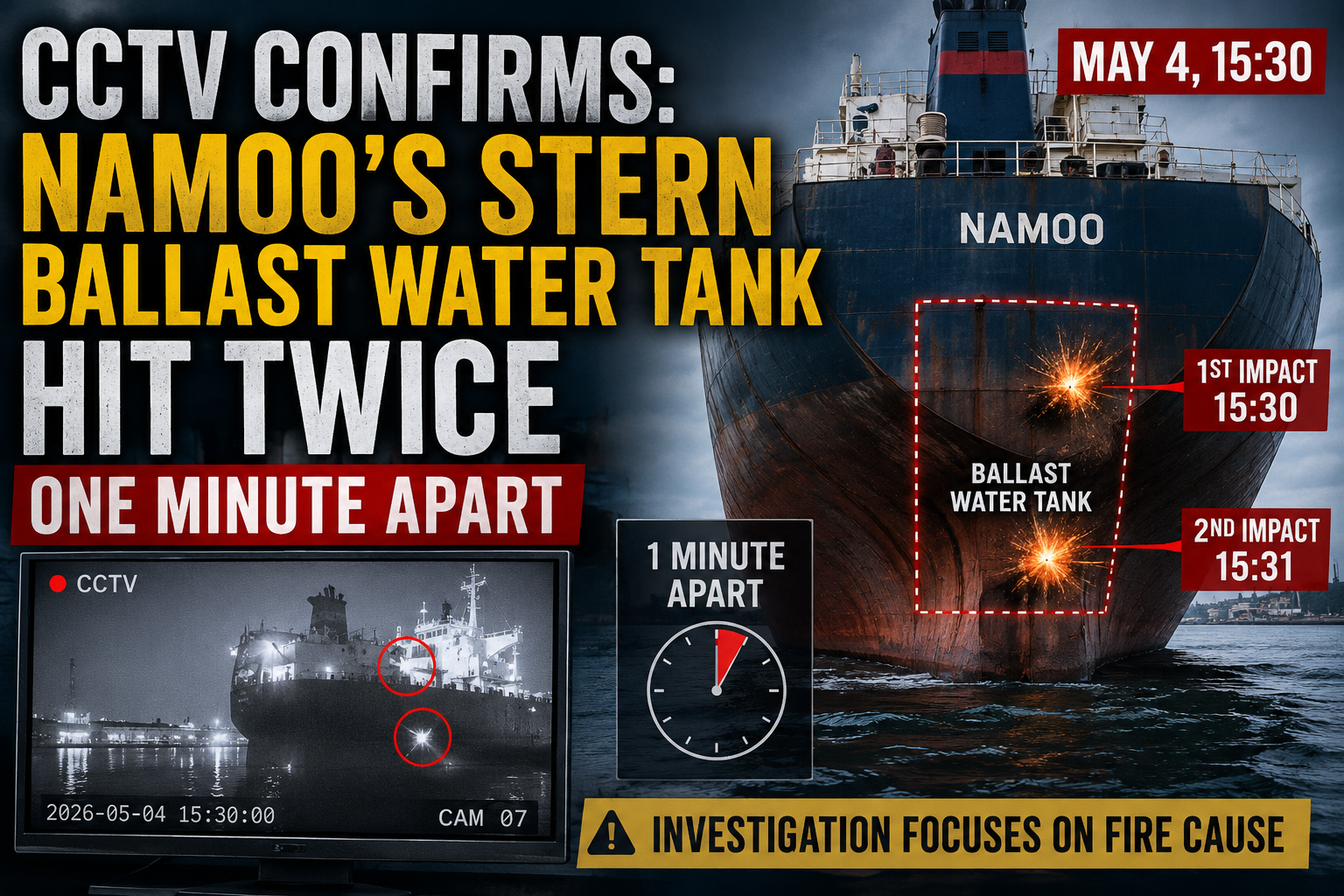
Yonhap TV reported that the vessel Namoo’s stern ballast water tank was struck twice, with the two impacts occurring one minute apart. CCTV footage and an interview with the ship’s captain were used to confirm the timing and location, with the event logged at May 4, 15:30. The ongoing probe is concentrating on identifying the cause of the subsequent fire, and the findings will influence maritime safety investigation standards.
Detailed findings
What jumps out immediately is the precision of the evidence: Yonhap TV’s coverage shows that investigators relied on closed-circuit video and a captain’s interview to reconstruct the event. According to Yonhap TV, those sources confirmed two distinct impacts to the ship’s stern ballast water tank, separated by an interval of exactly one minute. That kind of clear, time-stamped verification changes the narrative from “an accident” to a tightly sequenced incident that can be analyzed step by step.
How investigators reconstructed the sequence
The reconstruction leaned on two concrete pieces of evidence captured and reported by Yonhap TV: CCTV imagery and the captain’s testimony. The timeline centers on a single timestamp — May 4 at 15:30 — which investigators used as the reference point for the two impacts. Because the strike interval is confirmed at one minute and the location is specified as the ballast water tank, the probe can now narrow its technical questions to what happened inside that compartment and what preceded the strikes.
Why you should care: a confirmed impact sequence in the ballast water tank focuses investigators on a small, describable set of failure modes rather than a diffuse, ship-wide search. Ballast tanks are crucial compartments that affect stability, ventilation, and access routes for crews and firefighting teams, so any confirmed mechanical or thermal event there has immediate safety and regulatory implications. Industry observers note that how investigators document and interpret these moments directly shapes subsequent safety guidance and inspection priorities.
It’s also important to be clear about limits. The narrative here is built from a single reporting source — Yonhap TV — which verified the strikes via CCTV and the captain’s interview and supplied a timestamp. Other corroborating reports or official agency statements were not provided in the material reviewed for this piece, so any broader conclusions about cause remain to be confirmed by the formal investigation results.
Even with that limitation, the confirmed facts are actionable: two impacts, one minute apart, at the stern ballast water tank, logged on May 4 at 15:30. For investigators and regulators, that narrow set of facts lets them prioritize forensic work inside the ballast compartment, examine sensor logs and structural panels around the stern, and reassess inspection and monitoring practices that could prevent similar incidents. If the final probe report links these strikes to the fire cause, the outcome will likely feed directly into updated safety investigation standards.
Industry Insider’s Take
Look, the real story here is the timing—two hits a minute apart suggests a rule-driven sequence, not a random failure.
Anyone who’s been in this space knows that pinpointed CCTV confirmation is a game-changer for how the final report gets written and how liability gets sorted out.
Bottom line? Expect tighter scrutiny on ballast tank monitoring and faster adoption of clear, timestamped evidence in future maritime investigations.
Based on the original article: https://www.youtube.com/watch?v=qQxASwZL8YE
AI-assisted, reviewed by Alpha Editor.