[작성자:] HelloWorld

  • Wavve Launches Betting on Fact: Korean Stars Judge Fake News in New OTT Reality Show

    Wavve Launches Betting on Fact: Korean Stars Judge Fake News in New OTT Reality Show

    Wavve has launched a new OTT original reality news game show called Betting on Fact, in which eight members confined to an isolated space must judge the veracity of presented news items. The program premieres on March 27, 2026, at 11:00 AM and positions itself as a 2026 first-half title to watch.

    What Betting on Fact is about

    Betting on Fact is described as a survival-style program built around the identification of fake news. In the format outlined by reporting, eight participants live in a confined space and are tasked with assessing whether news items are true or false, turning fact-checking into a competitive game. The show frames news literacy as both entertainment and a challenge, combining elements of reality TV with testing and debate over information accuracy.

    Cast and premiere details

    According to Chosun Biz, the cast includes personalities such as 장동민, 이용진, and 진중권 among others, and the first episode will be publicly released on March 27 at 11:00 AM. Wavve is presenting the series as an OTT original, and the announced lineup blends comedians and commentators who are expected to bring differing perspectives and strategies to the judging process.

    Format and tone

    Available reports indicate the series uses a gameshow structure to dramatize how people evaluate news: competitors must make judgments under isolation and pressure, likely with both strategic and persuasive elements. By turning verification into a competitive format, the program appears to emphasize the performative and human factors behind real-world fact-checking, rather than offering a purely journalistic or didactic approach.

    Why the series matters

    Chosun Biz characterizes Betting on Fact as one of the anticipated releases for the first half of 2026, reflecting broader interest in programming that engages with misinformation and media literacy. The fusion of entertainment and a topical social issue may make the show notable both for viewers seeking celebrity-driven reality content and for audiences curious about how false information is detected and debated in public forums.

    Where to watch and what to expect

    As an OTT original from Wavve, Betting on Fact will be available through Wavve’s platform starting on the announced premiere date and time; further episode details and scheduling were not specified in the source notes. Viewers looking for a blend of reality competition and news-focused discussion can expect a format that foregrounds judgment, persuasion, and the social dynamics around deciding what to believe.
  • Bank of Korea Launches 5 Trillion Won Emergency Bond Buyback to Stabilize Markets

    Bank of Korea Launches 5 Trillion Won Emergency Bond Buyback to Stabilize Markets

    한국은행 announced an emergency purchase of government bonds totaling 5조원 to calm strained markets, split into two equal tranches of 2.5조원 on March 27 and April 1. The central bank framed the operation as a targeted liquidity injection to address recent disorder in the domestic bond market.

    The decision follows a marked spike in yields, with the 3년물 국채 금리 reaching its highest levels since mid‑2024, a development that unsettled traders and raised concerns about market functioning. According to reports, the bond purchases are intended to supply liquidity and relieve upward pressure on yields so that trading can proceed in a more orderly fashion.

    Described in source reports as a 비상 국채 매입, the two-step operation is explicitly designed as a short-term stabilising measure rather than a change in broader monetary policy. Reuters, via WTAQ, characterises the move as a liquidity-supplying intervention aimed at calming volatility rather than altering the policy stance of the central bank.

    The action in Seoul arrived as other policymakers across the region moved to support markets: available reports indicate that several Asian central banks have taken or signalled measures to stabilize local bond markets in recent sessions. That regional participation helped frame Korea’s purchases as part of a wider effort to prevent spillovers and contain disruptions to financial conditions.

    The announcement drew notable attention in financial news outlets, reflecting market sensitivity to abrupt shifts in bond yields and the increasing readiness of central banks to step in when liquidity strains appear. For investors and observers, the purchases underscore that authorities are prepared to use balance-sheet tools to preserve orderly market functioning when needed.

    Market participants will watch the planned tranches on March 27 and April 1 for signs of stabilisation and for any follow-up communications from the central bank. For now, the measure stands as a focused, time‑limited attempt to calm markets while authorities monitor whether further action or communication will be required, according to Reuters via WTAQ.

  • BTS Swim Debuts with 14M Spotify Streams, Surpassing Dynamite on Release Day

    BTS Swim Debuts with 14M Spotify Streams, Surpassing Dynamite on Release Day

    BTS’s new single “Swim” recorded 14 million Spotify streams on its release day, reportedly surpassing “Dynamite” by 1.9 times and “Butter” by 1.3 times. According to MBC Culture & Entertainment Plus coverage published on 2026-03-27, the track is driving major new-user growth following the release of the full-length album Arirang and is being projected as a contender for the top spot on the Billboard 200.

    Streaming performance and comparisons

    MBC Culture & Entertainment Plus reported that “Swim” achieved approximately 14 million streams on Spotify on its first day, a figure positioned at 1.9 times the day-one streams of “Dynamite.” The same coverage highlights that the single’s opening performance also outpaced “Butter,” at roughly 1.3 times that song’s comparable release-day figure. These raw streaming totals were emphasized in the outlet’s coverage as evidence of the song’s immediate global traction.

    New listener inflow after Arirang

    In addition to headline streaming numbers, MBC’s coverage noted a dramatic jump in new listeners following the release of the full-length album Arirang, with new-user figures reportedly rising by 690 percent. That surge was presented alongside the streaming statistics to illustrate how the album release has not only concentrated listening around a single track but also appears to have broadened BTS’s listener base in quantifiable ways.

    Billboard 200 outlook

    The same reports suggested that current momentum positions BTS to claim the number one slot on the Billboard 200, which would represent the group’s sixth No. 1 album since debut. While final chart placements will depend on the week’s full sales and streaming tallies, the combination of high first-day Spotify streams and the recorded influx of new listeners underpinned the optimistic projection in MBC’s analysis.

    This performance should be read in the context of BTS’s established global presence and the particular prominence of the Arirang album within their catalog. Available coverage frames “Swim” not as an isolated hit but as part of a larger commercial and cultural cycle tied to the album release, with immediate metrics reinforcing longer-term chart ambitions.

    MBC Culture & Entertainment Plus’s report published on 2026-03-27 at 10:00 highlighted these figures and projections; final confirmation of chart positions and longer-term streaming trends will become clearer as weekly and monthly tallies are released.

  • JYP Entertainment Launches 2026 Global Audition The HEAT for a New K-pop Boy Group

    JYP Entertainment Launches 2026 Global Audition The HEAT for a New K-pop Boy Group

    JYP Entertainment has launched the “2026 JYP BOY GROUP GLOBAL AUDITION: The HEAT,” which opened on March 26 at 2:00 PM; online applications are being accepted through May 28, and the company will hold regional auditions across global markets. This audition is positioned as a new scout project to find members for a JYP representative K-pop boy group.

    The initiative is explicitly framed as a K-pop boy group rookie discovery project, aimed at identifying and training talent who could debut under JYP’s management. According to the information released, the program combines an open online application window with in-person or regional audition stages, reflecting JYP’s continued investment in global talent sourcing and development.

    Practical details reported include the opening time and date—March 26 at 2:00 PM—and the application deadline of May 28, with submissions accepted online. While the announcement emphasizes “global regional auditions,” the available material does not list specific cities or venues; interested applicants are therefore advised to monitor JYP’s official communication channels for further schedules and location updates.

    This report was filed as an exclusive by Star News Korea and published on 2026-03-27 at 10:05. Available reporting indicates that the primary goal of the audition is to discover a new flagship boy group for JYP, continuing a pattern of large-scale global searches that have been part of the company’s talent pipeline in recent years.

    For those searching in Korean, the audition has been promoted using the phrase “JYP 보이그룹 오디션 The HEAT,” which may help when locating announcements or application portals posted on Korean-language platforms. Because the presented material focuses on the call for applicants and the broad schedule, precise application requirements and selection criteria should be confirmed through JYP Entertainment’s official notices before applying.

    Ultimately, this audition represents JYP’s latest effort to cultivate a new generation of K-pop performers on a global scale. Available reports emphasize the company’s intent to find members who can form a representative boy group under the JYP banner, and the multi-month application period reflects the scale of the search and the competitive nature of the selection process.

  • Han Kang Wins US National Book Critics Circle Award

    Han Kang Wins US National Book Critics Circle Award

    Han Kang, the Nobel laureate and South Korean novelist, has been honored with a National Book Critics Circle award for one of her novels, according to a report published March 27, 2026 by ClickOrlando / News4Jax. The announcement places her among this year’s recipients recognized by US book critics and arrives alongside awards given to works addressing topics such as artificial intelligence.

    This recognition reinforces the sustained international presence of Han Kang’s writing. Since receiving the Nobel Prize, she has remained a prominent figure in contemporary literature, and this latest accolade from the United States’ National Book Critics Circle adds to a string of global acknowledgments of her work. Available reports indicate the award highlights both the literary quality of the novel and the continued interest of anglophone critics in translated Korean literature.

    The National Book Critics Circle award is granted by a group of professional book critics in the United States, and this year’s selections included a diverse set of titles. Alongside Han Kang’s novel, coverage notes that other winners ranged across subjects, including books that examine artificial intelligence and its cultural implications. While the detailed category or title of Han Kang’s winning work was not specified in the initial report, the broader recognition is clear.

    Multiple international media outlets have carried the news, reflecting how Han Kang’s achievements are followed closely worldwide. The report from ClickOrlando / News4Jax is part of what appears to be overlapping international coverage, signaling that this award has both literary and cultural resonance beyond national borders. Such reporting helps bring attention to translated works and to conversations about contemporary themes represented in prize-winning books.

    For readers and translators, the award may prompt renewed interest in Han Kang’s back catalogue and in new translations, while also underscoring the role of critics’ awards in shaping international readership. As coverage continues to appear across outlets, this recognition serves as another marker of Han Kang’s influence on global literature and of the ongoing exchange between Korean writing and the wider literary world.

  • South Korea’s Overseas Investment Rebounds 8.7% After Two Years of Decline

    South Korea’s Overseas Investment Rebounds 8.7% After Two Years of Decline

    South Korea’s overseas investment rose by 8.7% last year, marking a rebound after two years of decline, according to a Chosun Ilbo English report published on 2026-03-27 10:00. This uptick ends a sustained downward trend and signals a tentative shift in capital flows beyond the country’s borders.

    Despite the headline increase of 8.7%, the report notes a contrasting development in net flows: 순 투자액 reached its lowest level in eight years. At the same time, repatriated funds—described in the source as 회수 자금—surged by 65%, a large rise that helps explain why gross outbound commitments can increase even as net investment weakens.

    Viewed together, the figures suggest a complex picture. The rise in gross overseas investment points to renewed outward commitments by South Korean investors, while the steep increase in returned capital and the multiyear low in net investment indicate that a significant portion of previously invested assets is being brought back. Such dynamics can reflect portfolio rebalancing, exits from earlier foreign ventures, or other capital-management decisions that the summary does not fully detail.

    The coverage of these shifts has attracted attention on domestic portals, where the story achieved notable ranking exposure. That visibility underscores how closely corporate and investor behavior is being watched as markets and policy environments evolve, and it may also shape public perception of whether this is a durable recovery or a short-lived rebound.

    For observers tracking South Korea’s external investment position, the near-term questions are straightforward: will gross outflows continue to grow while repatriations stabilize, and does the rise in gross investment presage a longer-term reversal of the previous decline? Available reports indicate the situation has moved from long-term decline to recovery, but subsequent data releases will be needed to confirm a sustained turnaround.

    This account is based on the Chosun Ilbo English summary published on 2026-03-27 10:00; search hint: 한국 해외 투자 반등.

  • South Korea’s Retail Day Traders Drive KOSPI Rally on Record Deposits and High Turnover

    South Korea’s Retail Day Traders Drive KOSPI Rally on Record Deposits and High Turnover

    Undeterred by ongoing conflict, South Korean retail day traders have intensified buying on the KOSPI, keeping daily trading dominance and posting record cash balances that reinforce a retail-led rally amid volatility. Available reports indicate personal deposit balances reached a record 132 trillion won, trading volume exceeded 40 trillion won, and active stock accounts numbered 1억180만개 (approximately 100.8 million), with retail trades accounting for roughly 60% of daily turnover.

    What the headline figures mean for market dynamics

    The scale of retail activity is striking: a peak in personal cash deposits signals that individual investors have considerable dry powder, while the surge in daily turnover and active accounts shows both participation and frequency have climbed. These metrics—reported repeatedly and highlighted in KOFIA-related coverage and summarized by WHTC—suggest that retail appetite is not a short-lived phenomena but part of a sustained trading pattern. The combination of record deposits and elevated trading volume has coincided with a KOSPI run that, after a six-month multiple rise, has entered a more volatile phase with individuals continuing to lead buying pressure.

    How retail behavior has shaped the rally

    Even as geopolitical tensions have persisted, retail investors appear to view the market as an opportunity rather than a deterrent. The data point that retail trades represent around 60% of daily activity indicates that many price moves and short-term liquidity conditions are being set by these smaller, often day-trading participants. That concentration of activity can amplify intraday swings and can help explain why the post‑rally period has been particularly changeable: a market dominated by high-frequency retail flows will naturally show sharper intraday volatility even as an overall uptrend remains.

    Risks and resilience in a retail-driven market

    A market driven heavily by individual traders carries both resilience and fragility. On one hand, substantial retail deposits and high account activity provide a steady source of demand that can support prices during broader risk-off episodes. On the other hand, the same concentrated retail participation can exacerbate reversals if sentiment shifts rapidly. Observers citing KOFIA data and repeated media coverage note the unusual scale of retail engagement—not merely anecdotal enthusiasm but measurable capital and activity that have the power to move the KOSPI meaningfully.

    What to watch next

    Investors and analysts should monitor whether retail deposit balances continue to grow, whether active account figures stabilize or decline, and how the retail share of daily turnover evolves. Given the six-month ascent in the KOSPI followed by increased volatility, the interplay between macro news, geopolitical developments, and retail trading patterns will likely determine near-term market direction. Continued reporting from sources like WHTC, and data releases associated with KOFIA, will be useful barometers of whether this retail-led phase solidifies or retraces.

    Final perspective

    The current episode highlights a distinct structural shift: South Korean individual investors now hold larger cash cushions and participate more frequently than in past cycles, and they have maintained buying even amid war-related uncertainty. Whether that persistence ultimately smooths the market’s path higher or seeds sharper corrections will depend on sentiment and incoming data, but for now the retail cohort remains the dominant daily force on the KOSPI.

  • Seoul KOSPI Slumps as Renewed Middle East Tensions Hit Samsung Electronics and SK Hynix

    Seoul KOSPI Slumps as Renewed Middle East Tensions Hit Samsung Electronics and SK Hynix

    KOSPI opened sharply lower on March 27, slipping 3.74% to 5,256.46 after trading began. Major tech names led the decline, with 삼성전자 down 3.72% and SK하이닉스 falling 4.82%, while the 원/달러 환율 rose to 1,511.5 won, an increase of 4.5 won from the previous close.

    The market move coincided with a renewed flare-up of tensions in the Middle East that spread a global risk‑off mood among investors. Available reports indicate that U.S. equities also weakened on the news, with the S&P500 down 1.74% and the Nasdaq off 2.38%, signaling broad declines across international markets as traders sought to reduce exposure to risk assets.

    The sharp falls in heavyweight domestic names amplified the KOSPI’s drop. With Samsung전자 and SK하이닉스 among the largest constituents, their share price moves exerted disproportionate influence on the index’s performance at the open, contributing to the rapid downside move that characterized early trading.

    Alongside equity pressure, the currency market showed a modest response: the won weakened to 1,511.5 per dollar, rising 4.5 won. This move in the foreign exchange rate occurred in tandem with the equity selloff and reflected broader flows into perceived safe havens and dollar‑denominated assets as geopolitical uncertainty increased.

    The episode drew repeated coverage across major outlets and was reported by The Korea Times on 2026-03-27 at 09:20. Market participants will be watching developments in the region and updates from global exchanges closely, as further news could continue to influence both Korean equities and currency markets in the near term.

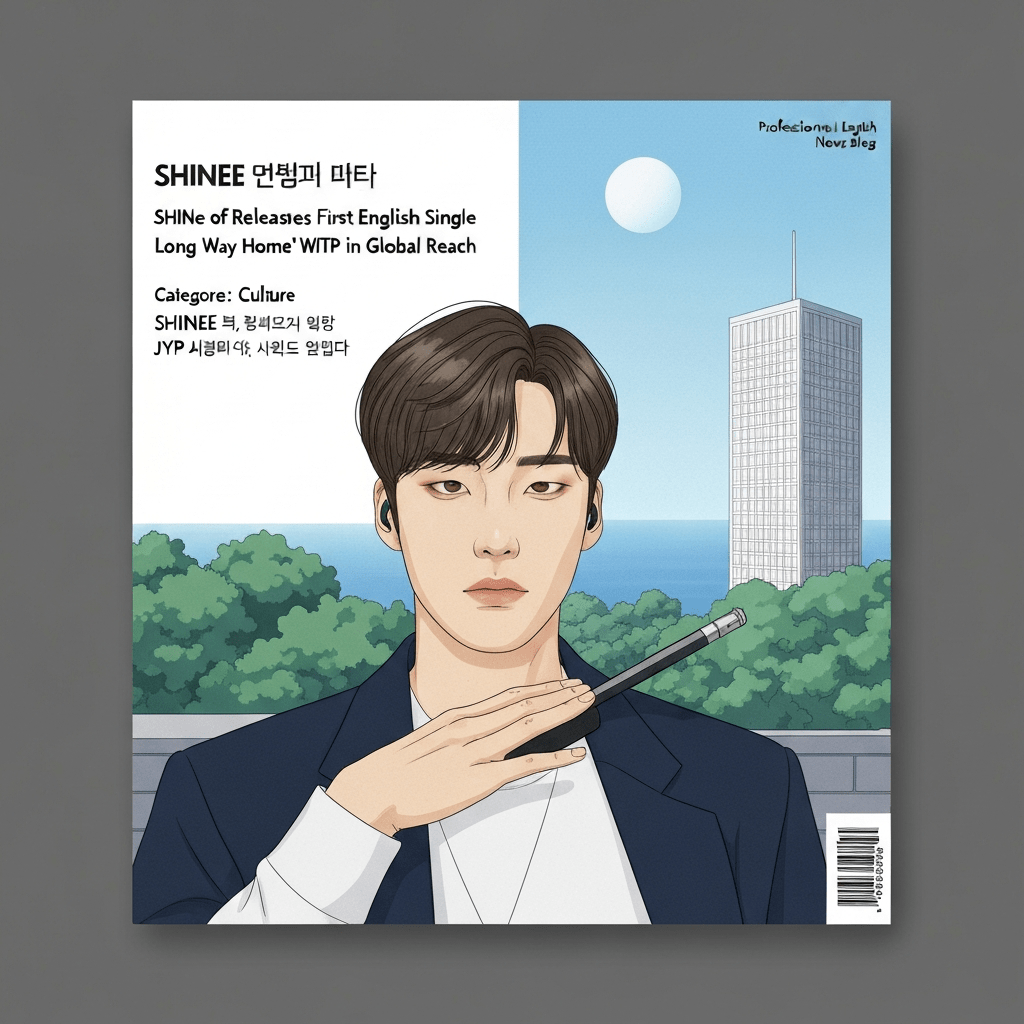
  • Taemin of SHINee Releases First English Single Long Way Home With JYP in Global Reach

    Taemin of SHINee Releases First English Single Long Way Home With JYP in Global Reach

    SHINee‘s Taemin will release his first English-language digital single, “Long Way Home,” this Friday, marking his first project since moving to JYP and a deliberate step toward the global market. According to a front-page report by Korea JoongAng Daily, the release is positioned as Taemin’s initial English-language effort aimed at broadening his international reach.

    Release details and immediate context

    “Long Way Home” is presented as a single digital release, set to arrive this Friday; the announcement highlights that this is Taemin’s first English-language song. The timing follows his transition to JYP, and media coverage frames the single as the inaugural project under that new phase of his career. Available reports indicate the move is purposeful: an English-language track is being used to target audiences beyond Korea, aligning with a wider strategy for global market engagement.

    Why this matters for Taemin’s career

    For an artist like Taemin—whose work with SHINee has long had international resonance—releasing a song in English represents both a symbolic and practical expansion. The single serves as a testing ground for how his solo artistry translates linguistically and culturally to non-Korean-speaking listeners. The fact that major domestic outlets such as Korea JoongAng Daily ran front-page coverage suggests the industry views the release as noteworthy within the broader K-pop landscape and Taemin’s personal trajectory.

    Artistic and strategic considerations

    Shifting to an English-language single can affect everything from songwriting choices to promotion and distribution channels. While specific creative details about “Long Way Home”—such as collaborators, genre, or lyrical themes—were not provided in the available report, the strategic intent is clear: this is a first attempt to directly engage global listeners in their primary language. Fans and industry observers will likely watch how promotional activities, streaming performance, and critical reception respond to this new direction.

    What to watch next

    Following the release, indicators to monitor include official statements from JYP or Taemin’s team, streaming platform placement, and subsequent live or media appearances that support the single. Given the report’s emphasis on global outreach, any follow-up moves—such as international promotions or additional English-language material—would help clarify whether this single is a standalone experiment or the start of a longer-term shift.

    Reporting note

    The information in this article is based on a report published by Korea JoongAng Daily on 2026-03-27 and summarizes the key facts presented there: the release of Taemin’s first English digital single “Long Way Home,” its Friday release date, and its significance as his first project after joining JYP.

  • South Korea Bans Naphtha Exports, Sets Second-Round Gasoline Price Cap

    South Korea Bans Naphtha Exports, Sets Second-Round Gasoline Price Cap

    Korea has imposed a naphtha export ban and applied a second-round gasoline price cap as part of a policy push to stabilize energy prices amid renewed regional tensions, according to reporting by Korea JoongAng Daily on 2026-03-27. The measures were highlighted as immediate steps to shore up domestic supply and control retail fuel costs.

    What the government announced

    The two central measures detailed in the available reporting are a formal naphtha export ban and the application of a second-round gasoline price cap. The reporting frames these actions as coordinated elements of an energy-price stabilization policy; specific operational details such as the precise scope of the export ban or the formula for the price cap were not included in the provided source notes.

    Why the measures were introduced

    Officials framed the steps against the backdrop of heightened geopolitical risk in the Middle East, described in the source material as Middle East tensions, which have affected global energy markets. The stated rationale is to reduce volatility in domestic fuel prices and to protect consumers and businesses from sudden international price shocks, making price stability the explicit policy objective in the available reporting.

    Market coverage and significance

    Coverage in stock market reports is cited as part of the measure’s significance, indicating that investors and market participants were monitoring these policy moves for their potential impact on energy-related sectors and broader market sentiment. Available reports indicate that the announcements were considered material enough to appear in financial and market analyses, though the provided source notes do not include specific market reactions or quantified effects.

    How long will these measures remain in place?

    The reporting does not specify a duration or sunset clause for either the naphtha export ban or the second-round gasoline price cap. Given the lack of those details in the source notes, the longevity and conditional triggers for lifting or adjusting the measures remain unclear from the provided material.

    The actions and context were reported by Korea JoongAng Daily on 2026-03-27 at 09:00, and were presented in the source material as part of Korea’s immediate response to external energy-market pressures. Further reporting would be required to obtain enforcement details, industry responses, and any quantified impact on domestic supply chains or refined-product prices.